Baby Size by Week: Fruit Comparison Chart
See how big your baby is each week compared to fruits — from poppy seed to watermelon. Fun visual size guide for weeks 1-40.
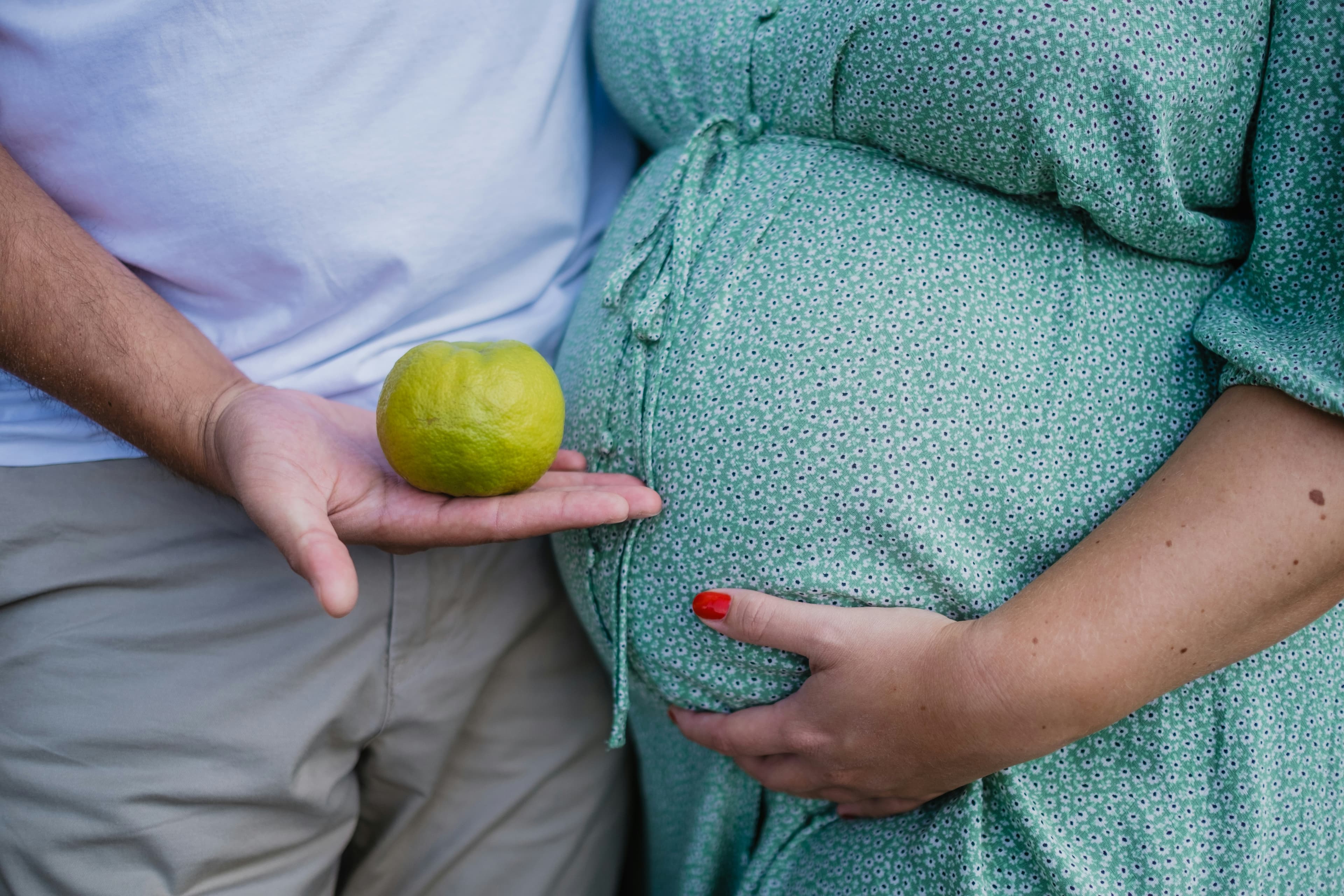
Baby Size by Week: Fruit Comparison Chart
One of the most exciting parts of pregnancy is watching your baby grow. Comparing baby size by week to everyday fruits makes those tiny measurements feel real. From a poppy seed at week 4 to a watermelon at week 40, this guide shows you exactly how your baby compares to familiar produce.
All measurements in this guide are based on data from ACOG's fetal growth charts, Mayo Clinic's pregnancy week-by-week guides, and the NHS pregnancy resources.
First Trimester: Tiny but Growing Fast (Weeks 4-13)
During the first trimester, your baby grows from a barely visible cluster of cells to a recognizable human form about 3 inches long. According to ACOG, the first trimester is the period of most rapid proportional growth.
| Week | Fruit Comparison | Approximate Length | Approximate Weight |
|---|---|---|---|
| Week 4 | Poppy seed | 0.04 in (1 mm) | Less than 1 g |
| Week 5 | Sesame seed | 0.05 in (1.3 mm) | Less than 1 g |
| Week 6 | Lentil | 0.08 in (2 mm) | Less than 1 g |
| Week 7 | Blueberry | 0.3 in (8 mm) | Less than 1 g |
| Week 8 | Raspberry | 0.6 in (1.6 cm) | About 1 g |
| Week 9 | Cherry | 0.9 in (2.3 cm) | About 2 g |
| Week 10 | Strawberry | 1.2 in (3 cm) | About 4 g |
| Week 11 | Fig | 1.6 in (4 cm) | About 7 g |
| Week 12 | Lime | 2.1 in (5.4 cm) | About 14 g |
| Week 13 | Lemon | 2.9 in (7.4 cm) | About 23 g |
By the end of the first trimester, your baby has all major organs forming and is starting to look distinctly human. According to the Cleveland Clinic, by week 12, the baby's heartbeat can be detected with a Doppler device at your prenatal appointment.
Second Trimester: Rapid Growth (Weeks 14-27)
The second trimester is when your baby's size becomes truly impressive. They grow from the size of a lemon to nearly 15 inches long. According to Mayo Clinic, the baby gains about 6 ounces per week during the later part of this trimester.
| Week | Fruit Comparison | Approximate Length | Approximate Weight |
|---|---|---|---|
| Week 14 | Nectarine | 3.4 in (8.7 cm) | 1.5 oz (43 g) |
| Week 15 | Apple | 4 in (10.1 cm) | 2.5 oz (70 g) |
| Week 16 | Avocado | 4.6 in (11.6 cm) | 3.5 oz (100 g) |
| Week 17 | Pear | 5.1 in (13 cm) | 5 oz (140 g) |
| Week 18 | Bell pepper | 5.6 in (14.2 cm) | 6.7 oz (190 g) |
| Week 19 | Mango | 6 in (15.3 cm) | 8.5 oz (240 g) |
| Week 20 | Banana | 6.5 in (16.4 cm) | 10.6 oz (300 g) |
| Week 21 | Carrot | 10.5 in (26.7 cm)* | 12.7 oz (360 g) |
| Week 22 | Papaya | 10.9 in (27.8 cm) | 15.2 oz (430 g) |
| Week 23 | Grapefruit | 11.4 in (28.9 cm) | 1.1 lb (500 g) |
| Week 24 | Corn on the cob | 11.8 in (30 cm) | 1.3 lb (600 g) |
| Week 25 | Cauliflower | 13.6 in (34.6 cm) | 1.5 lb (660 g) |
| Week 26 | Zucchini | 14 in (35.6 cm) | 1.7 lb (760 g) |
| Week 27 | Cabbage | 14.4 in (36.6 cm) | 1.9 lb (875 g) |
*Note: Starting around week 20-21, measurements switch from crown-to-rump length to crown-to-heel length, which is why you see a jump in the numbers.
At the halfway mark (week 20), your baby is about 10 inches from crown to heel and weighs roughly 10 ounces. According to ACOG, the anatomy scan ultrasound performed around this time measures the baby's head, abdomen, and femur to assess growth.
Third Trimester: The Final Sprint (Weeks 28-40)
In the third trimester, your baby focuses on gaining weight and maturing their organs. According to March of Dimes, babies typically gain about half a pound per week during the third trimester.
| Week | Fruit Comparison | Approximate Length | Approximate Weight |
|---|---|---|---|
| Week 28 | Eggplant | 14.8 in (37.6 cm) | 2.2 lb (1 kg) |
| Week 29 | Butternut squash | 15.2 in (38.6 cm) | 2.5 lb (1.15 kg) |
| Week 30 | Coconut | 15.7 in (39.9 cm) | 2.9 lb (1.3 kg) |
| Week 31 | Pineapple | 16.2 in (41.1 cm) | 3.3 lb (1.5 kg) |
| Week 32 | Jicama | 16.7 in (42.4 cm) | 3.7 lb (1.7 kg) |
| Week 33 | Celery bunch | 17.2 in (43.7 cm) | 4.2 lb (1.9 kg) |
| Week 34 | Cantaloupe | 17.7 in (45 cm) | 4.7 lb (2.1 kg) |
| Week 35 | Honeydew melon | 18.2 in (46.2 cm) | 5.3 lb (2.4 kg) |
| Week 36 | Romaine lettuce | 18.7 in (47.4 cm) | 5.8 lb (2.6 kg) |
| Week 37 | Swiss chard bunch | 19.1 in (48.6 cm) | 6.3 lb (2.9 kg) |
| Week 38 | Leek | 19.6 in (49.8 cm) | 6.8 lb (3.1 kg) |
| Week 39 | Mini watermelon | 19.9 in (50.7 cm) | 7.3 lb (3.3 kg) |
| Week 40 | Watermelon | 20.2 in (51.2 cm) | 7.6 lb (3.5 kg) |
According to the NHS, the average full-term baby at week 40 weighs about 7.5 pounds (3.4 kg) and measures about 20 inches (51 cm) from head to toe. However, healthy babies can range from 5.5 to 10 pounds at birth.
Baby Growth Milestones by Trimester
Beyond size, your baby hits important developmental milestones each trimester.
First Trimester Milestones
- Week 5: Heart begins to beat
- Week 8: All major organs are forming
- Week 10: Fingers and toes are fully separated
- Week 12: Baby can make a fist and suck their thumb
Second Trimester Milestones
- Week 14: Baby can make facial expressions
- Week 18: Baby can hear sounds
- Week 20: Anatomy scan confirms healthy development
- Week 24: Baby reaches viability outside the womb (with intensive medical care)
Third Trimester Milestones
- Week 28: Baby can open and close their eyes
- Week 32: Baby practices breathing movements
- Week 36: Baby settles into a head-down position
- Week 39: Baby is considered full term
What Affects Baby Size?
Several factors influence how big or small your baby measures at each week. According to ACOG, these include:
- Genetics — parental height and build are the strongest predictors
- Nutrition — adequate maternal nutrition supports healthy growth
- Placental function — the placenta delivers nutrients and oxygen
- Multiple pregnancy — twins and triplets are typically smaller at each gestational week
- Maternal health conditions — diabetes can lead to larger babies, while preeclampsia can restrict growth
- Sex — male babies tend to be slightly larger than female babies on average
If your doctor says your baby is measuring ahead or behind, try not to worry. According to Mayo Clinic, ultrasound size estimates can be off by up to 15% in either direction, especially in the third trimester.
Track Your Baby's Growth Week by Week
Want to see your baby's size and development milestones every week? MyBumpGuide gives you detailed weekly updates from week 1 all the way to week 40, plus month-by-month tracking for baby's first year.
Use our pregnancy calculator to find your current week.
Frequently Asked Questions
How accurate are baby size comparisons to fruit?
Fruit comparisons are approximations meant to help you visualize your baby's size. Actual baby measurements vary. According to ACOG, ultrasound measurements are the most accurate way to track fetal growth, and even those have a margin of error of 10-15%.
When does a baby grow the fastest during pregnancy?
According to the Cleveland Clinic, babies grow most rapidly in length during the second trimester and gain the most weight during the third trimester. Between weeks 28 and 40, the average baby triples its weight.
What if my baby is measuring small or large for gestational age?
Your doctor will monitor growth patterns over multiple appointments. A single measurement outside the normal range is usually not concerning. According to Mayo Clinic, about 10% of babies are classified as small for gestational age and 10% as large for gestational age. Your provider may order additional ultrasounds or tests to ensure everything is on track.
How does baby size relate to the bump I can see?
Bump size does not always correlate with baby size. Factors like your body type, muscle tone, amniotic fluid levels, and baby's position all affect how large or small your bump appears. According to the NHS, first-time mothers often show later than those who have been pregnant before.
When does my baby start gaining the most weight?
The most significant weight gain happens in the third trimester, particularly between weeks 32 and 40. According to March of Dimes, your baby gains about half a pound per week during this period, going from roughly 3.7 pounds at week 32 to an average of 7.5 pounds at birth.
Sources
- American College of Obstetricians and Gynecologists (ACOG). "How Your Fetus Grows During Pregnancy." acog.org
- Mayo Clinic. "Fetal development: The first trimester." mayoclinic.org
- Cleveland Clinic. "Fetal Development: Stages of Growth." clevelandclinic.org
- National Health Service (NHS). "Your pregnancy week by week." nhs.uk
- March of Dimes. "Common discomforts of pregnancy." marchofdimes.org